 |
 British
Cinema: A Critical History British
Cinema: A Critical History
Amy Sargeant
Although new writing and research on British cinema has burgeoned over
the last fifteen years, there has been a continued lack of single-authored
books providing a coherent overview of this fascinating and elusive national
cinema. Amy Sargeant's personal and entertaining history of British cinema
aims to fill this gap. With its insightful decade by decade analysis,
British cinema is brought alive for a new generation of students and
the general reader alike. Softcover, 374 pp. $34.95.
 Shepperton
Babylon: The Lost Worlds of British Cinema Shepperton
Babylon: The Lost Worlds of British Cinema
Matthew Sweet
British cinema has a long, rich history, even though some sophisticates
think the British industry has never been anything but a pale shadow
of Hollywood. In Shepperton Babylon, Matthew Sweet invites us all to
think again. This is the story of scandals, suicides, immolations, contract
killings, and much more. In short, this is a Babel of voices from the
lost worlds of British cinema. Softcover, 388 pp. $30.00.
 The
Lost World of Mitchell & Kenyon The
Lost World of Mitchell & Kenyon
Edwardian Britain on Film
Vanessa Toulmin, Simon Popple & Patrick Russell
The discovery of the Peter Worden Mitchell and Kenyon collection has been described
as film's equivalent of Tutankhamen's tomb. This treasure trove of 800 films
provides an unparalleled social record of everyday life in early twentieth
century Britain. Using a variety of contexts -- historical, social, economical,
and cinematic -- this anthology of essays provides a vivid assessment of the
collection. Softcover, 210 pp. $34.95.
 Keeping
it Real: Irish Film and Television Keeping
it Real: Irish Film and Television
Ruth O'Brien & Harvey Barton
This timely collection of essays considers the nature and direction
of Irish film and television, and also explores the contributions of
other media including radio and the internet to contemporary Irish culture.
It includes topics such as the first Irish-language soap opera, the new
Irish gangsters, Irish identity post-September 11, images of Belfast
in recent Irish film, female punishment in Irish history and culture,
and print and radio coverage of the 'Roy Keane' affair as a proving ground
for new Irish masculinity. Softcover, 210 pp. $34.50.
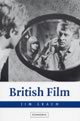 British Film British Film
Jim Leach
This book explores British cinema in relation to its social,
political, and cultural contexts. Each chapter deals with a specific
topic -- including realism, expressionism, popular cinema, film and
theatre, sexuality and gender, comedy, class and ideology, heritage
film, and diasporic cinema -- and features close readings of key
films from different historical periods. Softcover, 289 pp. $37.95.
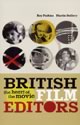 British Film Editors British Film Editors
Roy Perkins & Martin Stollery
The contributions of film editors have long been overlooked or simply not understood.
In British Film Editors, the craftmen and craftswomen convey, in their
own words, the nature of their elusive art. By focusing exclusively on film
editing, this book offers an alternative history of cinema, both highly readable
and thoroughly fascinating. Softcover, 248 pp. $41.95.
 Irish National Cinema Irish National Cinema
Ruth Barton
From the international success of Jordan and Sheridan, to the
smaller productions of the new generation of Irish filmmakers, the
recent flowering of Irish cinema can be seen as a symbol of the nation's
emergence into the mainstream global economy. In Barton's discussion
of contemporary Irish filmmaking, she reflects on questions of nationalism,
gender, and the representation of the Troubles and of Irish history,
as well as cinema's response to the legacy of the 'Celtic Tiger'.
Softcover, 214 pp. $35.95.
 Story and Character: Interviews with British Screenwriters Story and Character: Interviews with British Screenwriters
Alastair Owen
Praised by dramatist David Hare as "the most purely likeable book about
cinema that I have ever read," Story and Character is the first-ever
anthology of interviews with British screenwriters. Lively and funny, challenging
and revealing, this series of exclusive interviews with the unsung heroes of
contemporary British cinema provides a unique behind-the-scenes look at the
movie business. Softcover, 310 pp. $31.95.
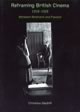 Reframing British Cinema 1918-1928: Between Restraint and Passion Reframing British Cinema 1918-1928: Between Restraint and Passion
Christine Gledhill
This is a major new study of British Cinema's formative years. Between
1918-1928 British film was poised between a Victorian past and a future
marked out as American. Examining a cinema inextricably intertwined with
notions of theatricality, pictorialism and storytelling, in which high
cultural, middlebrow and popular intersect, this book re-evaluates the
little known but interesting and often startling films of the 1920s.
Softcover, 214 pp. $41.95.
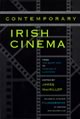 Contemporary Irish Cinema Contemporary Irish Cinema
James MacKillop
The various essays in Contemporary Irish Cinema take a variety
of approaches to the study of Irish films and filmmakers. The authors
probe cinema's rewriting of Irish history, the influence of the writings
of Martin Heidegger, and the attitudes towards the institutional church
in films such as Michael Collins, In the Name of the Father, Pigs, Playboys,
and several others. Softcover, 290 pp. $37.95.
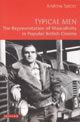 Typical Men: The Representation of Masculinity in Popular British Cinema Typical Men: The Representation of Masculinity in Popular British Cinema
Andrew Spicer
A broad and lively account of masculinity in British Cinema from the Second
World War to the present day. Hardcover, 252 pp. $62.95.
 The Encyclopedia of British Film The Encyclopedia of British Film
Brian McFarlane
Comprehensive, authoritative and consistently entertaining, this
is an essential reference work for all who work in, write about or simply
enjoy watching British film. Inside you'll find nearly 6,000 entries:
a veritable who's who of actors, directors, composers, cinematographers,
writers, producers and all of the other creative personnel involved in
British filmmaking. Softcover, 774 pp. $52.95.
 British Social Realism British Social Realism
Samantha Lay
Samantha Lay examines the movements, moments and cycles of British social realist
texts through a detailed consideration of practice, politics, form, style,
and content. Films discussed include: Listen To Britain, Saturday
Night and Sunday Morning, Letter to Brezhnev, Nil By Mouth,
and many others. Softcover, 134 pp. $30.50.
 The Undercut Reader: Critical Writings on Artists' Film and Video The Undercut Reader: Critical Writings on Artists' Film and Video
Nina Danino/Michael Maziere
This Reader is a collection of writing and visual works from Undercut,
the only UK magazine dedicated to artists' film and video from 1980 to 1990,
combined with newly-commissioned articles by leading critics in the field. Undercut critically
explored the aesthetics and politics of film and video practices within the context
of visual arts and independent cinema. Softcover 277 pp. $41.95.
 British National Cinema British National Cinema
Sarah Street
This book provides an accessible and thorough exploration of the fascinating
development of British cinema. It examines genres such as Ealing comedies,
Hammer horror and Merchant-Ivory period pieces. B&W illustrations. $29.99.
Back to top |
|


























 100 British Documentaries: BFI Screen Guides
 British Film Directors: A Critical Guide
 British War Films: 1939-1945
 Film Propaganda in Britain and Nazi Germany: World War II Cinema
 The
Pocket Essential Great British Movies
The
Pocket Essential Great British Movies Directors
in British and Irish Cinema
Directors
in British and Irish Cinema Cinema
and Northern Ireland
Cinema
and Northern Ireland British
Cinema and the Cold War: The State, Propaganda and Consensus
British
Cinema and the Cold War: The State, Propaganda and Consensus Tears
of Laughter: Comedy-drama in 1990s British Cinema
Tears
of Laughter: Comedy-drama in 1990s British Cinema  Shepperton
Studios: A Visual Celebration
Shepperton
Studios: A Visual Celebration  Visions
of England: Class and Culture in Contemporary Cinema
Visions
of England: Class and Culture in Contemporary Cinema Icons
in the Fire
Icons
in the Fire National
Heroes: British Cinema in the Seventies and Eighties
National
Heroes: British Cinema in the Seventies and Eighties  Hollywood
England
Hollywood
England
