
 Bollywood: A Guidebook to Popular Hindi Cinema Bollywood: A Guidebook to Popular Hindi Cinema
Tejaswini Ganti
In Bollywood, anthropologist and film scholar Tejaswini
Ganti provides a guide to the cultural, social and political significance
of Hindi cinema, outlining the history and structure of the Bombay
film industry, and the development of popular Hindi filmmaking since
the 1930s. Softcover, 254 pp. $23.95.
 The Cinema of Japan and Korea The Cinema of Japan and Korea
Justin Bowyer
This exciting volume provides a timely introduction to the history and continuing
vibrancy of Japanese and Korean film. With a wide range that spans from silent
cinema to the present day, and from films that have achieved classic status
to underground masterpieces, this collection provides an overview of the breadth
of the Japanese and Korean cinematic landscapes. Softcover, 258 pp. $34.50.
 Chinese National Cinema Chinese National Cinema
Yingjin Zhang
This introduction to Chinese national cinema, by a leading authority, covers
three 'Chinas': mainland China, Hong Kong and Taiwan. Historical and comparative
analyses bring out the parallel developments in the three Chinas, while critical
analysis explores thematic and stylistic changes over time. This refreshing
perspective on national identity will of interest to all students of film,
particularly those with a predilection for Chinese cinema. Softcover, 328 pp.
$42.95.
 The Remasculinization of Korean Cinema The Remasculinization of Korean Cinema
Kyung Hyun Kim
In one of the first English-language studies of Korean cinema
to date, Kyung Hyun Kim shows how the New Korean Cinema of the past
quarter century has used the trope of masculinity to mirror the profound
sociopolitical changes underway in the country. Offering in-depth
examinations of more than twenty-five of the most representative
films produced in Korea since 1980, The Remasculinization of Korean
Cinema is a groundbreaking study which examines the rich complexity
of the traditional and the modern, as well as the traumatic and the
post-traumatic in Korean cinema. Softcover, 331 pp. $35.95.
 Silver Screen Samurai: The Best of Japan's Samurai Movie Posters Silver Screen Samurai: The Best of Japan's Samurai Movie Posters
Hiroshi Yokoi
For over half a century, samurai movies haved wowed audiences
around the world with their gory sword fights and tear-jerking
tales of honour and sacrifice. This first-ever collection of original
samurai movie art pays glorious tribute to a cinematic genre that
is truly Japanese. Silver Screen Samurai is a must-have
for samurai fans, movie-buffs and lovers of poster art. Softcover,
111 pp. $29.95.
 Bollywood: Popular Indian Cinema Bollywood: Popular Indian Cinema
Lalit Mohan Joshi
Illustrated by rarely seen images from various film archives, Bollywood:
Popular Indian Cinema is written by the most prominent voices in filmwriting.
This wonderful book is the ultimate guide to Hindi cinema, celebrating what
is now a far-reaching and world renowned cultural phenomenon. Hardcover, 351
pp. $90.00.
 Chinese Films in Focus: 25 New Takes Chinese Films in Focus: 25 New Takes
Chris Berry
As Chinese films storm the international film scene, they consequently
stimulate a wide range of vigorous debate and insightful scholarship.
The evidence is here in Chinese Films in Focus: 25 New Takes,
a collection of 25 fresh and original readings of individual Chinese
films. Softcover, 216 pp. $37.95.
 Once Upon a Time in China Once Upon a Time in China
Jeff Yang
With wit and a genuine passion for the subject, author Jeff Yang
offers a colourful journey through the history of Chinese cinema, its
standout stars, moguls, and icons, and more than 350 of its most distinctive
works. Softcover, 306 pp. $26.50.
 Japanese Cinema: Essential Handbook Japanese Cinema: Essential Handbook
Thomas & Yuko Mihara Weisser
Thomas and Yuko Mihara Weisser have amassed and organized an unprecedented
amount of information about Japanese genre films, for this eclectic collection
of movie reviews. Fans of cult cinema, especially Japanese cult cinema, will
be floored by this remarkable book. Softcover, 420 pp. $29.95.
 Kung Fu Cult Masters: From Bruce Lee to Crouching Tiger Kung Fu Cult Masters: From Bruce Lee to Crouching Tiger
Leon Hunt
Bringing new insights to a hugely popular yet critically neglected genre, this
timely study focuses on Chinese martial arts films and the influence that they
have exerted on contemporary cinema. Films discussed include both popular and
cult classics such as Games of Death, Fist of Legend, The
36th Chamber of Shaolin, and Drunken Master. Softcover, 229 pp.
$34.95.
 The Yakuza Movie Book: A Guide to Japanese Gangster Films The Yakuza Movie Book: A Guide to Japanese Gangster Films
Mark Schilling
Here is an authoritative look at Japan's cinematic underworld of gangster movies.
An invaluable resource for fans, film buffs, and researchers, The Yakuza
Movie book features actor and director profiles, 123 film reviews, 50 black & white
photos, a bibliography, a glossary, and much more. A must for all fans of East-Asian
cinema. Softcover, 235 pp. $29.95.
 Japanese Documentary Film: The Meiji Era Through Hiroshima Japanese Documentary Film: The Meiji Era Through Hiroshima
Abe Mark Nornes
This is the first-ever English-language study of the subject, an
enlightening close look at the first fifty years of documentary film
theory and practice in Japan. Author Abe Mark Nornes draws on a wide
variety of archival sources to chart shifts in documentary style against
developments in the history of modern Japan. Softcover, 258 pp. $29.95.
 East-West Encounters: Franco-Asian Cinema and Literature East-West Encounters: Franco-Asian Cinema and Literature
Sylvie Blum-Reid
East-West Encounters is the first book of its kind to examine Franco-Asian
film and literary productions in the context of France's postcolonial history.
It covers French filmmakers' approaches to the Asian "Other", as
well as focusing on the works of Vietnamese and Cambodian directors living
and working in France. Softcover, 179 pp. $32.95.
 The Cinematic Imagination: Indian Popular Films as Social History The Cinematic Imagination: Indian Popular Films as Social History
Jyotika Virdi
As a kind of storytelling, Indian cinema provides a fascinating
account of social history and cultural politics, with the family
deployed as a symbol of the nation. Through a close examination
of approximately thirty Indian films that have appeared since 1950,
Jyotika Virdi demonstrates how concepts of the nation form the
centre of this cinema's moral universe. Softcover, 258 pp. $36.95.
 Celluloid China: Cinematic Encounters with Culture and Society Celluloid China: Cinematic Encounters with Culture and Society
Harry H. Kuoshu
Celluloid China is an introduction to the cinema of mainland China from
the early 1930's to the early 1990's. Emphasizing both film contexts and film
texts, this study introduces Chinese film scholars and students to a broad
cinematic analysis that includes investigations of cultural, cross-cultural,
intellectual, social, ethnic, and political issues. Softcover, 374 pp. $49.50.
 The Flash of Capital The Flash of Capital
Eric Cazdyn
This academic study examines the links between Japan's capitalist history and
its film history, illuminating what these connections reveal about film culture
and everyday life in Japan. Looking at a hundred-year history of film and capitalism,
Eric Cazdyn theorizes a cultural history that highlights the spaces where film
and the nation transcend their customary borders and, in doing so, develops
a new way of understanding historical change and transformation in modern Japan.
Softcover, 316 pp. $36.95.
 Ideology of the Hindi Film: A Historical Construction Ideology of the Hindi Film: A Historical Construction
M. Madhava Prasad
This book presents Indian cinema as an institution firmly rooted in contemporary
society, shaped by and shaping the political-ideological terrain of independent
India. Softcover, $36.50.
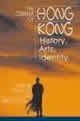 The Cinema of Hong Kong: History, Arts, Identity The Cinema of Hong Kong: History, Arts, Identity
Edited by Poshek Fu & David Desser
Providing an overview of major directors, genres, and stars, from its originsto the
present, this volume examines Hong Kong cinema in historical, transnational, cultural
and political contexts. A must read for fans of the genre. Softcover, $41.95.
 New Chinese Cinemas: Forms, Identities, Politics New Chinese Cinemas: Forms, Identities, Politics
Nick Browne, ed.
This important book analyses the changing forms and significance of Chinese filmmakers
and demonstrates that film is an important social document in these ongoing changes.
$33.95.
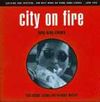 City on Fire: Hong Kong Cinema City on Fire: Hong Kong Cinema
Lisa Odham Stokes & Michael Hoover
A riveting book on the phenomenon that is Hong Kong cinema. A must for the serious
cineaste and the rabid fan. B&W illustrations. $28.00.
Back to top |


























 East Asian Cinema
 Fantasies of a Bollywood Love Thief
 Amitabh:
The Making of a Superstar
Amitabh:
The Making of a Superstar A
New History of Japanese Cinema: A Century of Narrative Film
A
New History of Japanese Cinema: A Century of Narrative Film  China
on Screen: Cinema and Nation
China
on Screen: Cinema and Nation  100
Bollywood Films
100
Bollywood Films An
Amorous History of the Silver Screen
An
Amorous History of the Silver Screen Contemporary
Asian Cinema
Contemporary
Asian Cinema The
Samurai Film
The
Samurai Film Japanese
Cinema Encyclopedia
Japanese
Cinema Encyclopedia Chinese-Language
Film
Chinese-Language
Film Outlaw
Masters of Japanese Film
Outlaw
Masters of Japanese Film A
Hundred Years of Japanese Film: A Concise History with a Selective
Guide to Videos and DVDs
A
Hundred Years of Japanese Film: A Concise History with a Selective
Guide to Videos and DVDs  Taiwan
Film Directors: A Treasure Island
Taiwan
Film Directors: A Treasure Island  Indian
Popular Cinema: A Narrative of Cultural Change
Indian
Popular Cinema: A Narrative of Cultural Change 
