|

 The
German Cinema Book The
German Cinema Book
Tim Bergfelder & Erica Carter
The German Cinema Book brings together film specialists from
Europe and the United States to explore German film history from the late nineteenth
to the early twenty-first century. This comprehensive test re-evaluates traditional
areas of interest in German Cinema and complements this with a fresh look at
hitherto neglected aspects, including early cinema and identity, and German film's
transnational connections to Hollywood, as well as to exile and migrant cinemas.
Softcover, 291 pp. $34.95.
 A
Culture of Light: Cinema and Technology in 1920s Germany A
Culture of Light: Cinema and Technology in 1920s Germany
Frances Guerin
In this compelling history of German silent cinema, the innovative use of light
is the pivot around which a new conception of a national cinema, and a national
culture, emerges. This history relieves German films of the responsibility
to explain the political and ideological instability of the period, an instability
said to be the uncertain foundation of Nazism. In unlocking this dubious link,
A Culture of Light redefines the field of German film scholarship. Softcover,
314 pp. $34.95.
 The
Cinema of Central Europe The
Cinema of Central Europe
Peter Names
This insightful volume examines the cinemas of Poland, Hungary, the Czech Republic,
Slovakia, and the former Czechoslovakia, from the early years of cinema through
to the post-1989 period. Each of the 24 chapters is written by an expert in
the languages and cinemas from the region and offers a diverse and eclectic
entry-point for understanding a variety of fascinating filmmakers. Softcover,
291 pp. $34.95.
 A
History of the French New Wave Cinema A
History of the French New Wave Cinema
Second Edition
Richard Neupert
A History of the French New Wave Cinema offers a fresh, bold look at the social, economic, and aesthetic mechanisms that shaped French film in the 1950s, as well as detailed studies of the most important New Wave movies of the late 1950s and early 1960s. Softcover, 408
pp. $29.95.
 The
Lost World of Mitchell & Kenyon The
Lost World of Mitchell & Kenyon
Edwardian Britain on Film
Vanessa Toulmin, Simon Popple & Patrick Russell
The discovery of the Peter Worden Mitchell and Kenyon collection has been described
as film's equivalent of Tutankhamen's tomb. This treasure trove of 800 films
provides an unparalleled social record of everyday life in early twentieth
century Britain. Using a variety of contexts -- historical, social, economical,
and cinematic -- this anthology of essays provides a vivid assessment of the
collection. Softcover, 210 pp. $34.95.
 Dietrich's
Ghosts: The Sublime and the Beautiful in Third Reich Film Dietrich's
Ghosts: The Sublime and the Beautiful in Third Reich Film
Erica Carter
After Weimer cinema there followed a reorganization of German cinema which
fostered an anti-modernist mode of spectatorship geared to an appreciation
of the beautiful and the sublime. Dietrich's Ghost is a major
new study which reassesses exciting paradigms in German film history debates
and throws suggestive new light on the icons and popular culture of the Third
Reich. Softcover, 246 pp. $34.95.
 German
Essays on Film German
Essays on Film
Richard W. McCormack & Alison Guenther-Pal
German film, since its inception, has called forth spirited debate
and critical attention from the nation's intellectuals, theorists and
artists, and even from its bureaucrats. These 43 thought-provoking essays
about film, come courtesy of some of Gemany's most significant cultural
figures of the twentieth-century. Softcover, 321 pp. $38.95.
 The
Cinema of Italy The
Cinema of Italy
Giorgio Bertellini
The 24 essays in The Cinema of Italy examine the recurring
historical, thematic and stylistic features of 24 of the most important
Italian sound films; each film is contextualised within both Italian
and Western film culture. This wide-ranging collection will introduce
the reader to works of established masters like Rossellini, De Sica,
and Antonioni as well as to films by controversial mavericks like Pasolini
and Argento. Softcover, 271 pp. $34.50.
 Alternative Europe: Eurotrash and Exploitation Cinema since 1945 Alternative Europe: Eurotrash and Exploitation Cinema since 1945
Ernest Mathijs & Xavier Mendik
Surreal vampire experimentations, German erotic cinema, giallos,
nunsploitation movies, and the necro-porn-horrors of Jorg Buttgereit:
these are but a few of the alternative cinemas of post-war Europe.
This eclectic volume investigates these previously under-explored
national traditions of film culture, with essays and festival reports
uncovering the social and cultural trends and tensions within a wide
range of European exploitation movies. Softcover, 269 pp. $31.95.
 The French Cinema Book The French Cinema Book
Michael Temple & Michael Witt
The French Cinema Book is an accessible and innovative survey of key
topics in French cinema from the 1890s to the twenty-first century. By combining
historical context and backround information with detailed discussion of case-studies,
analysis of films, recommendations for further reading and online resources,
this multi-authored volume propses new insights for the study and appreciation
of French Cinema. Softcover, 294 pp. $32.95.
 Chanteuse in the City Chanteuse in the City
Kelley Conway
An icon of working-class feminity and the underworld, the realist
singer signaled the emergence of new cultural roles for women as
well as shifts in the nature of popular entertainment. Chanteuse
in the City provides a genealogy of realist performance through
analysis of the music hall careers and film roles of Mistinguett,
Josephine Baker, Frehel, and Damia. Above all, this volume offers
a fresh interpretation of 1930s French cinema, emphasizing its love
affair with popular song and its close connections to the music hall
and the cafe-concert. Softcover, 246 pp. $37.95.
 Rubble Films: German Cinema in the Shadow of the Third Reich Rubble Films: German Cinema in the Shadow of the Third Reich
Robert R. Shandley
Rubble Films is a close look at German cinema in the immediate postwar
era, and a careful examination of its relationship to Allied occupation. Shandley
reveals how German films borrowed -- both literally and figuratively -- from
its Nazi past, and how the occupied powers (specifically the U.S.) used its
position as victor to open Europe to Hollywood movie products and aesthetics.
Softcover, 223 pp. $32.95.
 Hungarian
Cinema: From Coffee House to Multiplex Hungarian
Cinema: From Coffee House to Multiplex
John Cunningham
Hungarian cinema has been forced to tread a precarious and difficult path; through
the failed 1919 Revolution to the defeat of the 1956 Uprising and its aftermath,
Hungarian filmmakers and their audiences have had to contend with a multiplicity
of problems. This is the first book to discuss all major aspects of the history
of Hungarian cinema and its place in the development of Hungarian society. Hungarian
Cinema also focuses on film-makers as diverse as Zoltan Fabri and Bela Tarr
and includes coverage of under-explored areas of Hungarian cinema, including
avant-garde film-making and animation, football films, and representations of
Gypsy and Jewish minorities. Softcover, 258 pp. $36.00.
 New German Cinema: Images of a Generation New German Cinema: Images of a Generation
Julia Knight
This book explores the context from which the films of Germany emerged during
the late 1960s throughto to the mid-1980s. Knight considers the ways in which
the New German Cinema engaged with contemporary West German reality and how
they can be read as raising important questions about West Germany's self understanding
in the postwar era. New German Cinema is an indispensable tool for both
lecturers and students. Softcover, 124 pp. $27.95.
 From Caligari to Hitler: A Psychological History of the German Film From Caligari to Hitler: A Psychological History of the German Film
Revised and Expanded Edition
Siegfried Kracauer
Ever since 1947, when this treatise on the rich cinematic history of the Weimar
Republic was first published, From Caligari to Hitler has never gone
out of print. Now this beautifully designed and entirely new edition reintroduces
Sigfried Kracauer's discussions of The Cabinet of Dr. Caligari, M, Metropolis,
and The Blue Angel to the 21st century. Softcover, 348 pp. $29.95.
 The New German Cinema: Music, History, and the Matter of Style The New German Cinema: Music, History, and the Matter of Style
Caryl Flinn
This stimulating book looks at the crucial role that music plays
in the New German Cinema. In identifying styles of historical remembrance
in which music participates, Caryl Flinn provides illuminating insight
into issues of identity -- national, political, personal, and sexual
-- as represented by the films of R.W. Fassbinder, Ulrike Ottinger, Werner
Schroeter and others. Softcover, 323 pp. $29.95.
 European Film Industries European Film Industries
Anne Jackel
European Film Industries is the first title in a new series of books intended
to provide an accessible understanding of how the world's contemporary screen
industries function. This concise introduction provides an invaluable starting
point to the understanding of this most high profile of European media in the
age of digitisation and globalisation. Softcover, 168 pp. $37.95.
 Cinema of the Other Europe: The Industry and Artistry of East Central European Film Cinema of the Other Europe: The Industry and Artistry of East Central European Film
Dina Iordanova
Cinema of the Other Europe is a comprehensive study of the cinematic
traditions of Poland, Hungary, the Czech Republic and Slovakia from 1945
to the present day, exploring the major schools of filmmaking and the main
stages of development across the region during the period of state socialism
up until the end of the Cold War, as well as the more recent transformations
post-1989. Softcover, 224 pp. $32.99.
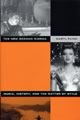 The New German Cinema: Music, History, and the Matter of Style The New German Cinema: Music, History, and the Matter of Style
Caryl Flinn
In this scholarly study, Caryl Flinn breaks new ground by considering contemporary
reception frameworks of the New German Cinema a generation after its end. Special
attention is placed on how music helps filmgoers engage with a range of historical
subjects and experiences. Flinn also examines queer strategies like kitsch
and camp while exploring the movement's charged construction of human bodies
on which issues of ruination, survival, memory, and pleasure are played out.
Hardcover, 323 pp. $97.99.
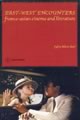 East-West Encounters: Franco-Asian Cinema and Literature East-West Encounters: Franco-Asian Cinema and Literature
Sylvie Blum-Reid
East-West Encounters is the first book of its kind to examine Franco-Asian
film and literary productions in the context of France's postcolonial history.
It covers French filmmakers' approaches to the Asian "Other", as
well as focusing on the works of Vietnamese and Cambodian directors living
and working in France. Softcover, 179 pp. $32.95.
 Cultural History through a National Socialist Lens Cultural History through a National Socialist Lens
Essays on the Cinema of the Third Reich
Robert C. Reimer
This collection of essays offers a view of Nazi Germany through an analysis
of twenty films representing a sampling of the period's directors and reflecting
the film mediums major genres. All of the films treated, regardless of their
fame or notoriety or the level of commitment of their directors to the Nazi
cause, played an important role in a cinema that not only represents the dreams
and lives of the citizens of the Third Reich, but influenced them as well.
Softcover 301 pp. $45.00.
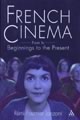 French
Cinema: From Its Beginnings to the Present French
Cinema: From Its Beginnings to the Present
Remi Fournier Lanzoni
From the earliest flickering images of the late nineteenth
century through the silent era, the Surrealist influence, the Nazi
Occupation, the glories of the New Wave, on into the 1990's and
beyond, France has consistently been a source for films of remarkable
innovation and artistry. French Cinema focuses on the most
pertinent French films and filmmakes, to provide the most up-to-date
and comprehensive history of the subject available. Hardcover,
496 pp. $64.00.
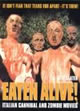 Eaten Alive! Italian Cannibal and Zombie Movies Eaten Alive! Italian Cannibal and Zombie Movies
Jay Slater
Every once in a while a book comes along that is so in tune with the cultural
zeitgeist that life after reading it is forever changed. Eaten Alive!
is not that book. However, if you're a fan of such films as Cannibal Holocaust, City
of the Living Dead, or Zombie Creeping Flesh then this comprehensive
catalogue of Italian cannibal and zombie movies is a must-have volume. Softcover,
256 pp. $32.95.
 The French New Wave: An Artistic School The French New Wave: An Artistic School
Michael Marie, translated by Richard Neupert
"In Richard Neupert's extremely readable translation, Michael Marie's French
New Wave is just what the directors ordered - a rat-a-tat-tat new look at
the Nouvelle Vague that is fresh and irreverent. Michel Poiccard/Jean-Paul Belmondo
would have loved it. " Rick Altman, University of Iowa Softcover, $32.95.
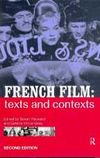 French Film: Texts and Contexts - French Film: Texts and Contexts -
Susan Hayward & Ginette Vincendeau, eds.
This innovative book provides detailed analyses of 22 key films within the
canon of French cinema from the 1930s to the 1990s. Includes Les enfants
du paradis, Les 400 coups, Nikita and La haine. If you love French
film, you need this book. $34.99.
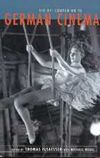 The BFI Companion to German Cinema The BFI Companion to German Cinema
Thomas Elsaesser
The best source of reference for German cinema from the 1880s to the 1990s.
Covers the entire spectrum of German cinema from Metropolis to Run,
Lola, Run. B&W illustrations. $39.95.
 Cinema Italian
Style: Italians at the Academy Awards Cinema Italian
Style: Italians at the Academy Awards
by Silvia Bizio
Foreword by Bernardo Bertolucci
This gorgeous, black and white extravaganza celebrates the continuing presence
of Italian actors, writers and directors at Hollywood's biggest night. From
Bertolucci to Benigni, Sophia Loren to Ennio Morricone, "Cinema Italian
Style" loving showcases all of the Italian skill and stardom that America
and the rest of the world has come to appreciate and adore. Large-format Softcover,
$31.95.
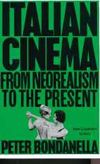 Italian Cinema from Neorealism to the Present Italian Cinema from Neorealism to the Present
Peter Bondanella
Film students love this book, fans of Italian film live this book. It has Sophia,
Marcello, Clint (as in Loren, Mastroianni and Eastwood). How could you go wrong!
$40.00.
 Refiguring Spain: Cinema/Media/Representation Refiguring Spain: Cinema/Media/Representation
Marsha Kinder, ed.
Places Spanish film in the context of redefining Spain's national/cultural
identity and its position on the global stage. The first comprehensive anthology
on Spanish cinema in English. B&W illustrations. $27.50.
Back to top |


























 Theatres of Occupation: Hollywood and the reeducation of Postwar Germany
 Diva: Defiance and Passion in Early Italian Cinema
 Italian Neorealism & Global Cinema
 A New Guide to Italian Cinema
 Film Propaganda in Britain and Nazi Germany: World War II Cinema
 German
Cinema: Since Unification
German
Cinema: Since Unification  The
New European Cinema: Redrawing the Map
The
New European Cinema: Redrawing the Map The
Cinema of France
The
Cinema of France Italian
Neorealism: Rebuilding the Cinematic City
Italian
Neorealism: Rebuilding the Cinematic City  Small
Nation, Global Cinema: The New Danish Cinema
Small
Nation, Global Cinema: The New Danish Cinema No
Place Like Home: Locations of Heimat in German Cinema
No
Place Like Home: Locations of Heimat in German Cinema  The
Cinema of Spain and Portugal
The
Cinema of Spain and Portugal The
Czechoslovak New Wave
The
Czechoslovak New Wave The
Art of Italian Film Posters
The
Art of Italian Film Posters European
Cinema: Face to Face with Hollywood
European
Cinema: Face to Face with Hollywood  French
National Cinema
French
National Cinema
