|
|

Criticism, Theory & History
T to Z by author
See also: On Individual Films
and Media > Film
Criticism
 Action
and Adventure Cinema Action
and Adventure Cinema
Yvonne Tasker
A wide variety of respected scholars have contributed to Action
and Adventure
Cinema. Themes explored in this anthology include genre and definitions;
early action, sensation and melodrama; authorship; national and transnational
action adventure traditions; action aesthetics; spectacle and narrative; stars
and bodies; class;
gender; and race and ethnicity. Softcover, 414 pp. $36.95.
 Film History: An Introduction Film History: An Introduction
Third Edition
David Bordwell & Kristin Thompson
Written by two of the leading scholars in film studies, Film History: An Introduction is a comprehensive, global survey of the medium and its many genres -- from drama and comedy to documentary and experimental. This third edition has been thoroughly updated to include recent films, new examples, and the first comprehensive overviews of the impact of globalization and digital technology on the cinema. Any serious film scholar -- professor, undergraduate, or graduate student -- will want to have a copy of this essential volume on their shelf. Softcover, 780 pp. $126.95.
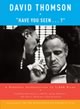 "Have You Seen...?" "Have You Seen...?"
David Thomson
This new book is a generous history of film and an enticing critical appraisal written with as much humor and passion as historical knowledge. Not content to choose his own top films (though they are here), Thomson has created a list that will surprise and delight you. He also probes the question: after one hundred years of film, which ones are the best, and why? Hardcover, 1007 pages. $ 45.00.
 The Whole Equation: A History of Hollywood The Whole Equation: A History of Hollywood
David Thomson
In The Whole Equation, David Thomson takes us from D.W. Griffith,
Charlie Chaplin, and the first movies of mass appeal to Louis B. Mayer, who understood
what movies meant to America -- and reaped the profits. From Capra to Kidman
and Hitchcock to Nicholson, Thomson examines the passion, vanity, calculation,
and gossip of Hollywood and the films it has given us. This one-volume history
is a brilliant and illuminating overview of "the wonder in the dark" --
and the staggering impact movies have had on American culture. Softcover, 402
pp. $21.00.
 Aesthetics & Film Aesthetics & Film
Katherine Thomson-Jones
Aesthetics and Film is a philosophical study of the art of film. Its motivation is the recent surge of interest among analytic philosophers in the philosophical implications of central issues in film theory and the application of general issues in aesthetics to the specific case of film. Of particular interest are questions concerning the distinctive representational capacities of film art, particularly in relation to realism and narration, the influence of the literary paradigm in understanding film authorship and interpretation, and our imaginative and affective engagement with film. Softcover, 148 pp. $30.95.
 Film Art: An Introduction Film Art: An Introduction
Ninth Edition
David Bordwell & Kristin Thompson
Ever since the first edition was published in 1979, Film Art has been the most widely read and respected introduction to film study. Emphasizing how artistic purposes guide form and technique, David Bordwell and Kristin Thompson help students develop analytical skills that will enrich their understanding of any film. This ninth edition is generously illustrated with frame enlargements from hundreds of films and it includes a tutorial CD-ROM with film clips, commentaries, and quizes. Softcover, 519 pp. $109.00.
 Crime Films: Investigating the Scene Crime Films: Investigating the Scene
Kirsten Moana Thompson
Part of the Short Cuts series, this volume analyses the wide body of films that fall under the rubric of crime, from the gangster film to the film noir, and from the classic whodunnit to TV series like CSI. The criminal underworld takes on many forms, and this volume delves into recent developments in the erotic thriller such as Basic Instinct and neo-noirs such as LA Confidential and Body Heat. There are also a number of close readings of some of the most enduring crime films, from G-Men to Se7en as well as of TV series such as Homicide and Hill Street Blues. Softcover, 142 pp. $25.00.
 A
House Made of Light: Essays on the Art of Film A
House Made of Light: Essays on the Art of Film
George Toles
Professor, screenwriter, and one of the best film critics working today, George
Toles offers his far-ranging ideas on cinema, in this marvelous compendium of
critical essays. Divided into three parts (with a special section on Hitchcock) A
House Made of Light, features chapters about Fargo, Leolo, Psycho,
and several other cinema classics. This book will be a welcome addition to the
library of any serious student of film. Softcover, 363 pp. $37.95.
 Reinventing Cinema: Movies in the Age of Media Convergence Reinventing Cinema: Movies in the Age of Media Convergence
Chuck Tyron
Reinventing Cinema examines film culture at the turn of the century, at the precise moment when digital media are altering our historical relationship with the movies. In an eye-opening analysis that spans multiple disciplines, Chuck Tryon addresses the interaction between production, distribution, and reception of films, television, and other new and emerging media. Softcover, 215 pp. $33.95.
 Technology
and Culture: The Film Reader Technology
and Culture: The Film Reader
Andrew Utterson
Technology and Culture: The Film Reader brings
together key theoretical texts from more than a century of
writing on film and technology.
It begins by exploring the intertwined technologies of cinematic
representation, reproduction, distribution and reception, before
locating the technological
history of cinema as one component of an increasingly complex
technological culture. Softcover, 152 pp. $39.95.
 Color:
The Film Reader Color:
The Film Reader
Angela Dalle Vacche & Brian Price
With examples from Hollywood and the avant-garde, from the European art film
and animation, Color, the Film Reader offers a wide range
of approaches to understanding the role of color in film. It highlights the
intersection of cinema with art history, theories of femininity, science, politics,
and philosophy. Color, the Film Reader includes seminal essays by Bazin, Eisenstein,
Arnheim, Rohmer, Batchelor, Oshima, and Brakhage. It also includes essays on
filmmakers who excel in their use of color, including Alfred Hitchcock, Paul
Thomas Anderson, Hou Hsiao-Hsien, Jean-Luc Godard, Michelangelo Antonioni,
Derek Jarman, Rouben Mamoulian and Douglas Sirk. Softcover, 214 pp. $41.50.
 Freedom
and Entertainment: Rating the Movies in an Age of New Media Freedom
and Entertainment: Rating the Movies in an Age of New Media
Stephen Vaughn
Freedom and Entertainment is the first book to offer a behind-the-scenes account
of the motion picture rating system and the MPAA under Jack Valenti's leadership.
This book is based on the private papers and oral history of Richard D. Heffner,
who headed the classification and rating administration for two decades. The
story chronicles the often tense working relationship between Heffner and Valenti,
and the sometimes bruising encounters Heffner had with Hollywood heavyweights
such as Clint Eastwood, Oliver Stone, Michael Douglas, George C. Scott, Lew Wasserman,
Arthur Krim, Jerry Weintraub and many others. Softcover, 336 pp. $33.95.
 Screen Saviors: Hollywood Fictions of Whiteness Screen Saviors: Hollywood Fictions of Whiteness
Hernan Vera and Andrew M. Gordon
This collaboration by a sociologist and a film critic, using the new perspective
of "white studies," offers a bold critique of almost a century's worth
of American film. Screen Saviors studies the way in which the social relations
that we call "race" are fictionalized and pictured in the movies. Softcover,
202 pp. $37.95.
 The
West in Early Cinema: After the Beginning The
West in Early Cinema: After the Beginning
Nanna Verhoeff
In The West in Early Cinema, Nanna Verhoeff investigates the emergence
of the western genre during the first two decades of cinema (1895-1915). She
analyzes many unknown and forgotten films from international archives and traces
the relationships between films about the American West, their surrounding films,
and other popular media such as photography, painting, (pulp) literature, Wild
West Shows and popular ethnography. Softcover,
459 pp. $45.95.
 Future Imperfect: Philip K. Dick at the Movies Future Imperfect: Philip K. Dick at the Movies
Jason P. Vest
Responsible for the literary sources of Blade Runner, Total Recall, Minority Report, and several other films, Philip K. Dick is undoubtably one of the major figures in science-fiction cinema. In this fascinating book, Jason P. Vest explores how the diverse group of filmmakers who have adapted Dick's work have each, in their turn, expanded, extrapolated, and diverged from Dick's fiction. Softcover, 223 pp. $23.50.
 Film Studies: The Basics Film Studies: The Basics
Amy Villarejo
Film Studies: The Basics gives necessary information about the movie industry; who does what on a film set; the history, the technology and the art of cinema, and theories of stardom, genre and film-making. Including illustrations and examples from an international range of films drawn from a century of movie making and a glossary of terms for ease of reference, this book is a suitable guide for film students or fans. Softcover, 171 pp. $22.50.
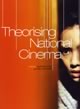 Theorising
National Cinema Theorising
National Cinema
Valentina Vitali & Paul Willemen
Theorising National Cinema is a major contribution to work on national cinemas,
by many of the leading scholars in the field. It addresses the knotty and complex
relationship between cinema and national identity, showing that the nationality
of a cinema production company, and of the films it made, have not always been
seen as pertinent. Softcover, 326 pp. $33.95.
 Film
as a Subversive Art Film
as a Subversive Art
Amos Vogel
Accompanied by over 300 rare film stills, Film as a Subversive Art analyzes
how aesthetic, sexual, and ideological subversives use one of the most powerful
art forms of our day to exchange or manipulate our conscious and unconscious,
demystify visual taboos, destroy dated cinematic forms, and undermine existing
value systems and institutions. This subversion of form, as well as of content,
is placed within the context of the contemporary world view of science, philosophy,
and modern art, and is illuminated by a detailed examination of over 500 films,
including many banned, rarely seen, or never released works. Softcover, 335 pp.
$30.00.
 Trauma
Cinema: Documenting Incest and the Holocaust Trauma
Cinema: Documenting Incest and the Holocaust
Janet Walker
Trauma Cinema focuses on a new breed of documentary films and
videos that adopt catastrophe as their subject matter and trauma as their aesthetic.
Incorporating oral testimony, home-movie footage, and documentary reenactment,
these documentaries express the havoc trauma wrecks on history and memory. By
demonstarting that the past does not come down to us purely though eye witness
accounts and tangible artifacts, Janet Walker exposes the frailty of memory in
the face of disquieting events.Softcover, 251 pp. $34.95.
 Exiles
in Hollywood Exiles
in Hollywood
David Wallace
Fleeing Nazi persecution, many of Europe's creative talents, including screen
legend Greta Garbo and composer Igor Stravinsky were "driven into paradise," settling
in Los Angeles. David Wallace tells the dramatic stories of these brilliant refugees.
His profiles include Billy Wilder, Fritz Lang, Jean Renoir, Aldous Huxley, Greta
Garbo, Hedy Lamarr, and many more. Softcover, 246 pp. $29.95.
 The
Philosophy of Film The
Philosophy of Film
Thomas E. Wartenberg & Angela Curran
The Philosophy of Film draws readings from philosophy,
film studies, and film criticism. Organized around a series of philosophic
questions
about
film, it offers an accessible and engaging overview of the discipline.
Readings from contrasting angles and points of view discuss the value
of film theory, the nature of film narration, the debate on whether
films can be socially critical, and the question of what we can learn
from a
film. Softcover, 308 pp. $48.95.
 Rebels
on the Backlot: Six Maverick Directors and How They Conquered the Hollywood
Studio System Rebels
on the Backlot: Six Maverick Directors and How They Conquered the Hollywood
Studio System
Sharon Waxman
The 1990s saw a shock wave of dynamic new directing talent that took the Hollywood
studio system by storm. At the forefront of that movement were six innovative
and daring directors -- Quentin Tarantino, Steven Soderbergh, David Fincher,
Paul Thomas Anderson, David O. Russell, and Spike Jonze -- whose films re-invigorated
the cinematic landscape. In Rebels on the Backlot, Sharon Waxman
weaves a fascinating tapestry out of the careers of these talented filmmakers.
Hardcover, 386 pp. $36.95.
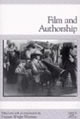 Film and Authorship Film and Authorship
Virginia Wright Wexman
During the 1960's when cinema first entered the acadamy as a
serious object of study, the primary focus was on "auteurism" --
film authorship. Spanning approaches including poststructuralism,
feminism, queer theory, postcolonialism, and cultural studies, the
essays in this collection ask, what does auteurship look like today
in light of all these developments? Includes an extensive bibliography.
Softcover, 270 pp. $36.50.
 Fifty Key American Films Fifty Key American Films
John White
Fifty Key American Films explores and contextualizes some of the most important films ever made in the United States. With case studies from the early years of cinema to the present day, this comprehensive Key Guide provides accessible analyses from a range of theoretical perspectives. Softcover, 262 pp. $35.50.
 Screening Sex Screening Sex
Linda Williams
Kisses were for many years the only sexual acts to be seen in mainstream American movies. Then, in the 1960s and 1970s, American cinema "grew up" in response to the sexual revolution, and movie audiences came to expect more knowledge about what happened between the sheets. In Screening Sex, the renowned film scholar Linda Williams investigates how sex acts have been represented on screen for more than a century, and how we have watched these representations. Softcover, 412 pp. $29.95.
 The
Moral Premise: Harnessing Virtue & Vice for Box Office Success The
Moral Premise: Harnessing Virtue & Vice for Box Office Success
Stanley D. Williams
Movies from The Incredibles to Braveheart understand
and embrace the importance of The Moral Premise. This book explains how the Moral
Premise -- a statement of truth about the protagonist's physical and psychological
predicament -- is a fundamental part of every successful movie's structure. It
is also a book about how you, a filmmaker or writer, can use the Moral Premise
to create great motion pictures that resonate with your audience. Softcover,
196 pp. $32.95.
 Cinema's Missing Children Cinema's Missing Children
Emma Wilson
Through close analysis of film, television and photographic images, and via
intense engagement with difficult emotions, Cinema's Missing Children is
the first major study of an area of increasingly cultural importance: the child
at risk from abduction, abuse, or illness. This study makes the case for film
as a reflection on reality and as a space for revealing personal and cultural
anxieties. Softcover, 181 pp. $34.95.
 Secret
Cinema: Gnostic Vision in Film Secret
Cinema: Gnostic Vision in Film
Eric G. Wilson
Recent commercial Gnostic films are meditations on the conundrums of the post-modern
age and the timeless soul. Eric Wilson's Secret Cinema establishes
the theoretical foundations and implications of the genre of Gnostic cinema.
The book discusses the functions of genre, the relationships between cinema and
psychology, the connections between the moving image and sacred power, the role
of the cinematographic apparatus, and the romance of film. It is attuned to material
attractions of the movies, those gorgeous lights and lurid shadows, but also
the film's spiritual invitations, the gaps between the pictures, the empty spaces
at the heart of life. Softcover, 174 pp. $24.95.
 Wayne
Winner's Arthouse Cinema #1 Wayne
Winner's Arthouse Cinema #1
Wayne Winner
Absolutely unique, this book is a collection of hilarious graphic art summaries
of more than 30 classics of arthouse cinema. Featuring eccentric renditions of The
Wicker Man, Blow Up, Blue Velvet, Le
Samourai, The Birds, Solaris, and
others, this book is certain to amuse even the most jaded movie snob. Softcover,
140 pp. $21.00.
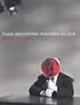 Paris
Hollywood: Writing on Film Paris
Hollywood: Writing on Film
Peter Wollen
In this new collection of writings on film, esteemed critic/theorist/filmmaker
Peter Wollen vents his opinion on a variety of fascinating issues. Included
are essays about Blade Runner, Riff-Raff Realism, Architecture and Film,
Jean-Luc Godard, Speed and the Cinema, John Ford, as well as many other topics.
This eclectic book is both engrossing and intelligent. Softcover, 314 pp. $29.00.
 Native Features: Indigenous Films from Around the World Native Features: Indigenous Films from Around the World
Houston Wood
Native Features is the first book to look at feature films made by Indigenous people, one of the world's newest and fastest growing categories of cinema. The book provides easy to understand guidelines to help viewers appreciate the more than fifty Indigenous features now in circulation. Native Features shows how movies made by native peoples throughout the world often strengthen older cultures while they simultaneously correct stereotypes found in non-Indigenous films. Softcover, 230 pp. $30.95.
 100 American Independent Films 100 American Independent Films
Second Edition
Jason Wood
In this revised and updated new edition, Jason Wood provides a guide to one hundred of the most interesting and influential American independent films, featuring indie classics such as Shadow, Blood Simple and Reservoir Dogs, with twenty-five brand new entries, including recent releases such as Old Joy, Junebug and Me and You and Everyone We Know. Each entry includes a plot synopsis, a commentary on the film's significance, production and exhibition history and cross-references to other films. Softcover, 279 pp. $21.95.
 Personal
Views Personal
Views
Robin Wood
This is the second in a series of Robin Wood's early books, so important in the
history of film studies, to be reprinted as part of the Contemporary Approaches
to Film and Television series. It is particularly satisfying that Personal
Views has followed the influential work on Howard Hawks, because this
is the only book on cinema by Wood never to have been published in the US. Published
originally in 1976 by a small art gallery in London, England, the book received
only limited distribution. The original collection of eleven essays is here augmented
by three additional pieces in the spirit of the work. Softcover, 423 pp. $31.50.
 Hollywood from Vietnam to Reagan . . . and Beyond Hollywood from Vietnam to Reagan . . . and Beyond
Robin Wood
"It is difficult to imagine the field of film studies without
Robin Wood's contribution." -- Christopher Sharrett,
Seton Hall University. Indeed, Robin Wood is one of the most important
voices in contemporary film scholarship. In this revised and expanded
edition of his seminal text, he adds provocative essays about teen
comedies, Day of the Dead, David Fincher and several other
subjects to this remarkable book of Hollywood film criticism. Softcover,
363 pp. $38.95.
 Chaplin
and Agee: The Untold Story of the Tramp, the Writer, and the Lost Screenplay Chaplin
and Agee: The Untold Story of the Tramp, the Writer, and the Lost Screenplay
John Wranovics
Chaplin and Agee charts the friendship between James Agee and Charles Chaplin.
Here, in print for the first time is Agee's amazing screenplay, The Tramp's
New World, lost until recently. Chaplin and Agee also features many
previously unpublished letters and photographs. As the story moves between Hollywood
and Greenwich Village, these two figures come to life, revealing the untold story
of the great bond between two influential twentieth-century artists. Softcover,
256 pp. $19.95.
 The
Cinema Dreams its Rivals The
Cinema Dreams its Rivals
Paul Young
Paul Young looks at the American cinema's imaginative constructions of three
electronic media -- radio, television, and the Internet -- at the times when
these media seemed to hold limitless possibilities. In doing so, he demonstrates
that Hollywood is indelibly marked by the advent of each new medium, from the
inclusion of sound in motion pictures to the use of digital graphics. But conversely,
Young argues, the identities of the new media are themselves changed as Hollywood
turns them to its own purposes and its own dreams. Softcover, 311 pp. $35.00.
Back to top
|
|