 |
 Celluloid Skyline: New York and the Movies Celluloid Skyline: New York and the Movies
James Sanders
New York City is one of the most indelible film locations in all
of cinema. Able to transcend the label of "setting", the
Big Apple often functions as a full-fledged character in the films
in which it appears. This magnificent book chronicles the romance between
the movies and New York City and ultimately offers a fresh way to look
at America's greatest Metropolis. Softcover, 496 pp. $44.95.
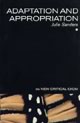 Adaptation and Appropriation Adaptation and Appropriation
Julie Sanders
From the apparently simple adaptation of a text into film, theatre, or a new
literary work, to the more complex appropriation of style or meaning, it is arguable
that all texts are somehow connected to a network of existing texts and art forms.
This well rounded volume brings clarity to the complex debates around adaptation
and appropriation, offering a much-needed resource for those studying literature,
film or culture. Softcover, 184 pp. $24.50.
 Deathtripping: The Extreme Underground Deathtripping: The Extreme Underground
Jack Sargeant
Deathtripping focuses on the post-punk New York filmmakers that coalesced around the radical manifesto by downtown filmmaker Nick Zedd, exploring in depth his demand for a cinema from which "none shall emerge unscathed." Contextualizing the work of these filmmakers within the wider underground film and downtown post-punk No Wave scenes, Deathtripping offers detailed analysis of the extreme cult films produced but this loose knit movement. Also presented are interviews with infamous and legendary filmmakers, including Richard Kern, Nick Zedd, Tommy Turner, Tessa Hughes-Freeland, Beth B and Casandra Stark. Softcover, 282 pp. $19.95.
 Naked Lens: Beat Cinema Naked Lens: Beat Cinema
John Sargeant
Naked Lens is a vital collection of essays and interviews
focusing on the most significant interfaces between the Beat
writers, Beat culture and cinema. New, updated and expanded version.
Softcover, 255 pp., $32.95.
 Direct Cinema: Observational Documentary and the Politics of the Sixties Direct Cinema: Observational Documentary and the Politics of the Sixties
Dave Saunders
Direct Cinema is the first comprehensive study of the seminal 'reactive obeservationalist' movement of 1960s America. Outlining the methods and achievements of a diverse range of filmmakers who together created the notion of the 'fly on the wall' documentary, this volume suggests that direct cinema was not only closely attuned to the artistic and political revolutions of the 1960s, but also representative of a resurgence of the United States' homegrown philosophical ideals. Softcover, 236 pp. $31.95.
 You Must Remember This: The Warner Bros. Story You Must Remember This: The Warner Bros. Story
Richard Schickel
You must remember this is the companion to Richard Schickel's five-hour television documentary commemorating the 85th anniversary of Warner Bros. Studios. The story of Warner Bros. is entwined with America's place in the 20th century, and here, for the first time, that story is told with incisive depth and candor. Hardcover, 480 pp. $53.50.
 Film on Paper: The Inner Life of Movies Film on Paper: The Inner Life of Movies
Richard Schickel
In this absorbing collection of brief essays on books about film, the distinguished critic Richard Schickel offers more insights into moviemaking than a reader will find in an entire shelf of film encyclopedias. He uses particular books about the movies as a launching pad for trenchant observations about films, actors, directors, producers, and the machinations of an always fascinating industry. Softcover, 292 pp. $22.95.
 Transcendental
Style in Film: Ozu, Bresson, & Dreyer Transcendental
Style in Film: Ozu, Bresson, & Dreyer
Paul Schrader
Acclaimed filmmaker Paul Schrader here analyzes the film style of three great
directors: Yasajiro Ozu, Robert Bresson, and Carl Dreyer. Even though these
artists come from divergent cultures, Schrader identifies within their work
a common dramatic language: "Trancendental Style", a spiritual expression
characterized by austere camerawork, acting devoid of self-consciousness, and
editing that avoids editorial comment. Softcover, 194 pp. $28.00.
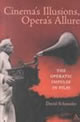 Cinema's Illusions,
Opera's Allure: The Operatic Impulse in Film Cinema's Illusions,
Opera's Allure: The Operatic Impulse in Film
David Schroeder
Inventor Thomas Edison originally saw the moving picture as a tool for presenting
opera. While this did not become film's primary use, the influence of opera
on cinema is striking. This book examines how the influence is seen in works
of many contemporary and past cinematographers and directors. Softcover, $25.95.
 On Hollywood: The Place, The Industry On Hollywood: The Place, The Industry
Allen J. Scott
Why is the U.S. motion picture industry concentrated in Hollywood and why does
it remain there in the age of globalization? Allen uses the tools of economic
geography to explore these questions and to provide a number of highly original
answers. On Hollywood will appeal to not only to general readers with
an interest in the motion picture industry, but also to economic geographers,
business professionals, regional development practioners, and cultural theorists
as well. Hardcover, 200 pp. $59.95.
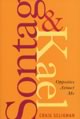 Sontag & Kael: Opposites Attract Me Sontag & Kael: Opposites Attract Me
Craig Seligman
With a wit and style worthy of his subjects, Craig Seligman
explores the enduring influence of two critics who defined the
cultural sensibilities of a generation: Susan Sontag and Pauline
Kael. By considering their similarities as well as their differences
-- both as writers as well as women -- Seligman ultimately explores
a far broader issue: can criticism be art? This highly readable
duo-analysis will be of interest to any student of cultural criticism,
particularly devotees of Sontag and Kael. Hardcover, 244 pp. $36.00.
 Teen Movies: American Youth on Screen Teen Movies: American Youth on Screen
Timothy Shary
This is a detailed look at the depiction of teens on film, the influence they
have had on the cinema, and the impact that they have had throughout film history.
Timothy Shary looks at the development of the teen movie from the earliest days
of cinema up to the most contemporary films. Profiled films include Rebel
Without a Cause, Splendor in the Grass, Carrie, The
Breakfast Club, I Know What You Did Last Summer, and American
Pie. Softcover, 125 pp. $28.00.
 The Age of Gold: Surrealist Cinema The Age of Gold: Surrealist Cinema
Robert Short
The Age of God revisits the two quinessential films of Surrealist cinema
-- Un Chien Andalou and L'Age d'Or -- and places them within
the context of the subversive cultural movement that was Surrealism. The expertly
written text is supplemented by a host of striking images which clearly illustrate
the Surrealists' themes of sex, mutilation, sadism, murder, and excremental
mania. Softcover, 188 pp. $23.99.
 Film Studies: An Introduction Film Studies: An Introduction
Ed Sikov
Ed Sikov builds a step-by-step curriculum for the appreciation of all types of narrative cinema, detailing the essential elements of film form and systematically training the spectator to be an active reader and critic. This book can be utilized alongside any screening list and can be used within courses on film history, film theory, or popular culture. Softcover, 212 pp. $34.95.
 John Simon on Film: Criticism 1982 - 2001 John Simon on Film: Criticism 1982 - 2001
John Simon
Providing evidence of both a wide-ranging intellect as well as scrupulous critical
faculties, John Simon's film reviews make for intensely satisfying reading. His
criticism, collected here, provides a wonderous overview of cinema from 1982
- 2001. This provocative book is but one volume of a major publishing event that
wil bring together the cultural writing of this highly respected cultural critic.
Hardcover, 662 pp. $38.95.
 Cinematic Mythmaking: Philosophy in Film Cinematic Mythmaking: Philosophy in Film
Irving Singer
In Cinematic Mythmaking, Irving Singer explores the hidden and overt use of myth in various films and, in general, the philosophical elements of a film's meaning. Mythological themes, Singer writes, perform a crucial role in cinematic art and even philosophy itself. Hardcover, 245 pp. $29.95.
 Shadows, Specters, Shards: Making History in Avant-Garde Films Shadows, Specters, Shards: Making History in Avant-Garde Films
Jeffrey Skoller
In Shadows, Specters, Shards, Jeffrey Skoller challenges the
myth that avant-garde films are obscurantist and disconnected from the realities
of social and political history and identifies a group of experimental films
that take up some of the most important historical events of our era. This cinema
of evocation rather than representation calls attention to those aspects of history
that exceed the visible and representable but nonetheless profoundly impact our
experience of everyday life. Softcover, 233 pp. $37.95.
Back to top
|
|



























 Film Fables
 Subversion: The Definitive History of Underground Cinema
 Cinema in the Digital Age
 Surrealism and Cinema
 The Science Fiction Film Reader
 Orson Welles and the Unfinished RKO Projects: A Postmodern Perspective
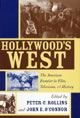 Hollywood's West: The American Frontier in Film, Television, & History
 Hollywood's White House
 Essential Cinema: On the Necessity of Film Canons
 The "I" of the Camera: Essays in Film Criticism, History, and Aesthetics
 Moving Pictures, Migrating Identities
 Virtual Voyages: Cinema and Travel
 Silent Players
 Cinema Nirvana: Enlightenment Lessons from the Movies
  Gangster Films
 The YouTube Reader
 Queer Screen: A Screen Reader
 Literature and Film
 The B List
 Guiltless Pleasures: A David Sterritt Film Reader
 Dogme Uncut
 Fleshpot: Cinema's Sexual Myth Makers & Taboo Breakers
 Land of a Thousand Balconies
 Migrating to the Movies: Cinema and Black Urban Modernity
  Hollywood Abroad: Audiences and Cultural Exchange
  The Cinema of Attractions Reloaded
 The Power of Film
 Guts & Glory: The Making of the American Military Image in Film
